
The problem: growth plans no one measures
Everyone has ideas for how a company should grow. Very few companies write down what each idea will actually take.
Here's a live example from our own agency. Taking our services to a new country looked like selling the same work somewhere new. In practice it meant having people there, partnering with a tech firm, and paying costs nobody had planned for. Each obstacle showed up one at a time, and none of it was tracked.
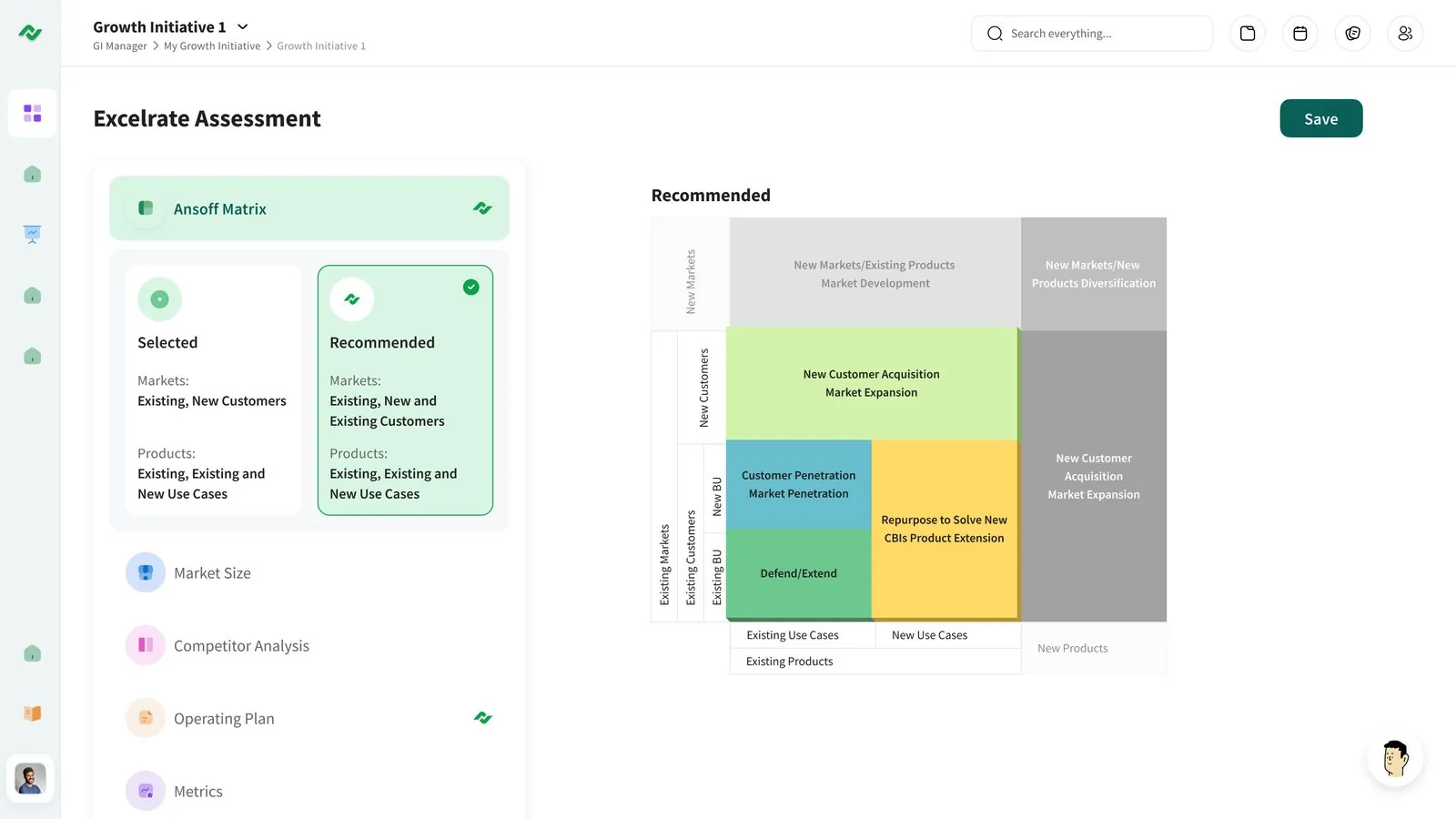
The founders had seen the same pattern many times while working with companies in finance, in India and abroad. They sorted growth into the familiar types from the Ansoff Matrix:
| Product | Existing market | New market |
|---|---|---|
| Existing product | Grow what you already do | Same product, new region |
| New product | New product, same region | New product, new region |
Whichever type a company picks, the plan has knock-on effects that are easy to underestimate. Take "hire 10 people": that isn't just running enough interviews to make 10 hires. Each person needs a desk, a laptop and IT access, a salary in the budget and, for a new product, training. If any of those falls behind, the timeline slips, and the path from idea to MVP to launch to profit gets longer.
The client wanted to show investors a platform that brings those effects to the surface early. They didn't want a plain tracker. They wanted it to point out where a plan would fall short and suggest how to get back on schedule.
The workshop: learning the domain from the people who knew it
This was the first workshop I attended in person. The other designer joined after it.
It started slowly. The founders were still getting used to us, how we worked and what a design workshop involves. Once that clicked, they opened up and the useful detail came through:
- What each role in a client company should do, and how the structure should look
- Who should start a growth strategy on the platform
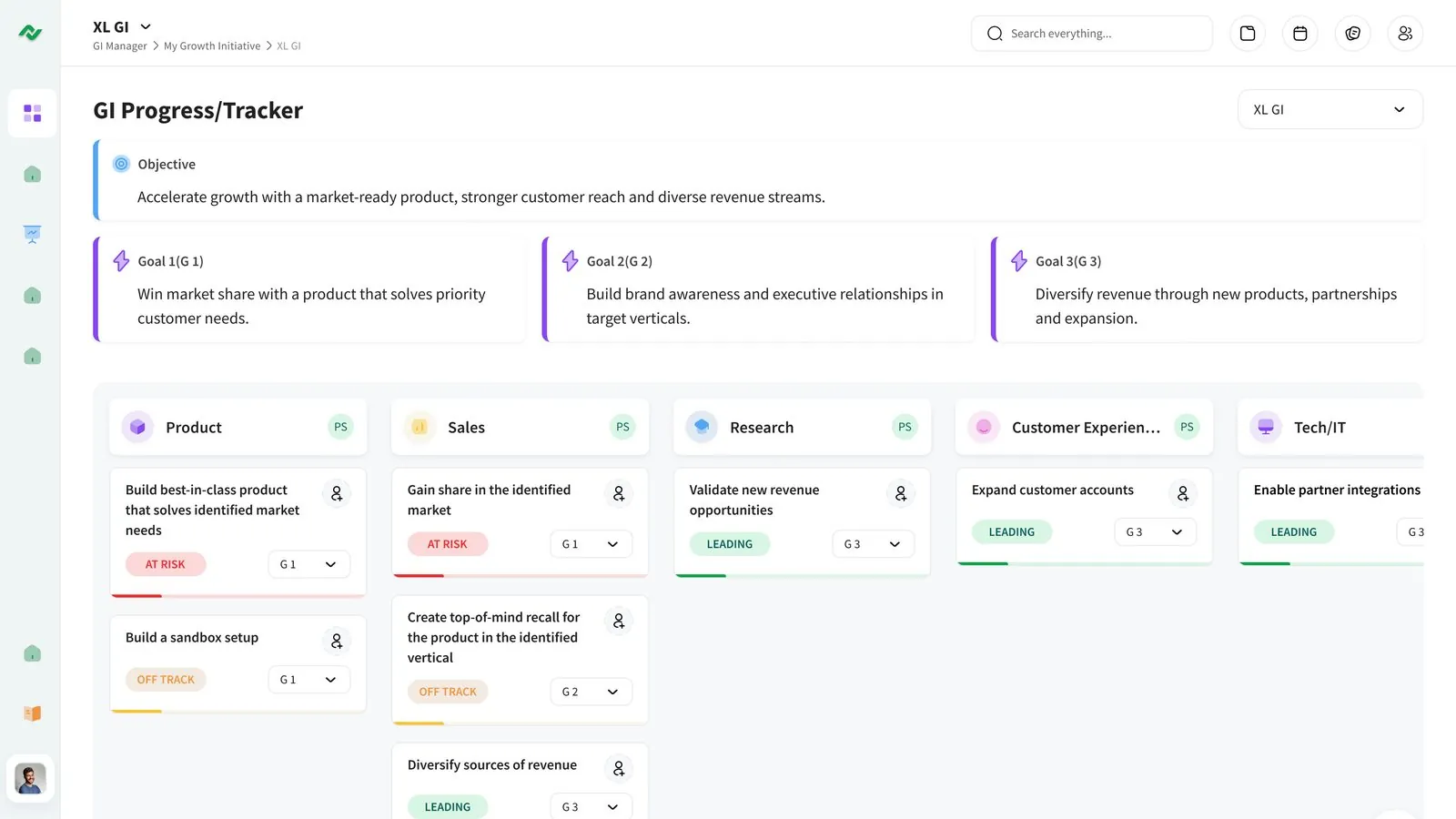
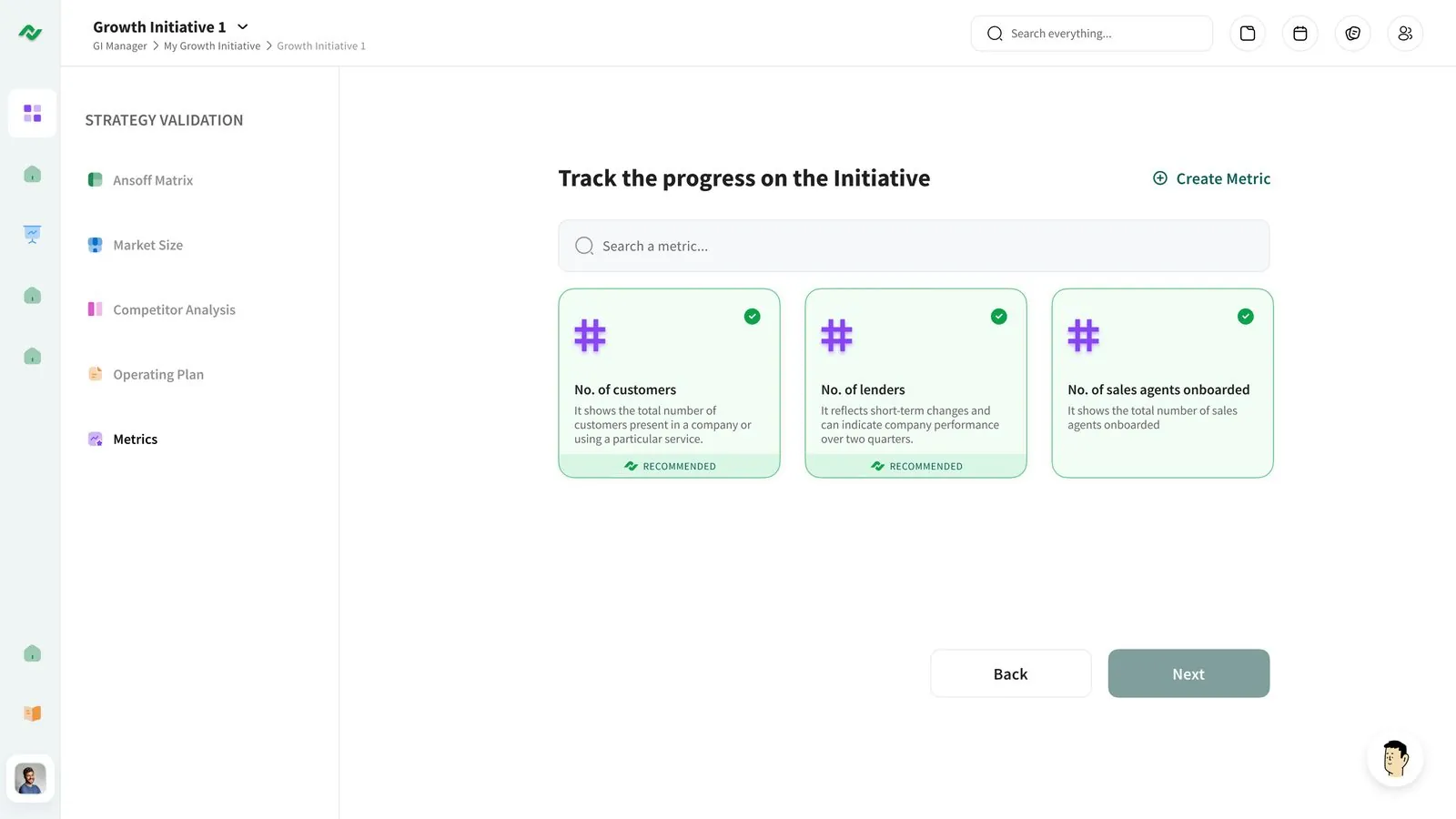
- How progress should be tracked, beyond a plain checklist
The founders knew finance and growth planning far better than I did. I added the most by asking questions, sharing a view where I had one, and helping decide which direction to take.
The journey we defined together
- Set up the company. Structure, roles and who is responsible for what.
- Choose the type of growth. New product, new region, or both, on the growth matrix.
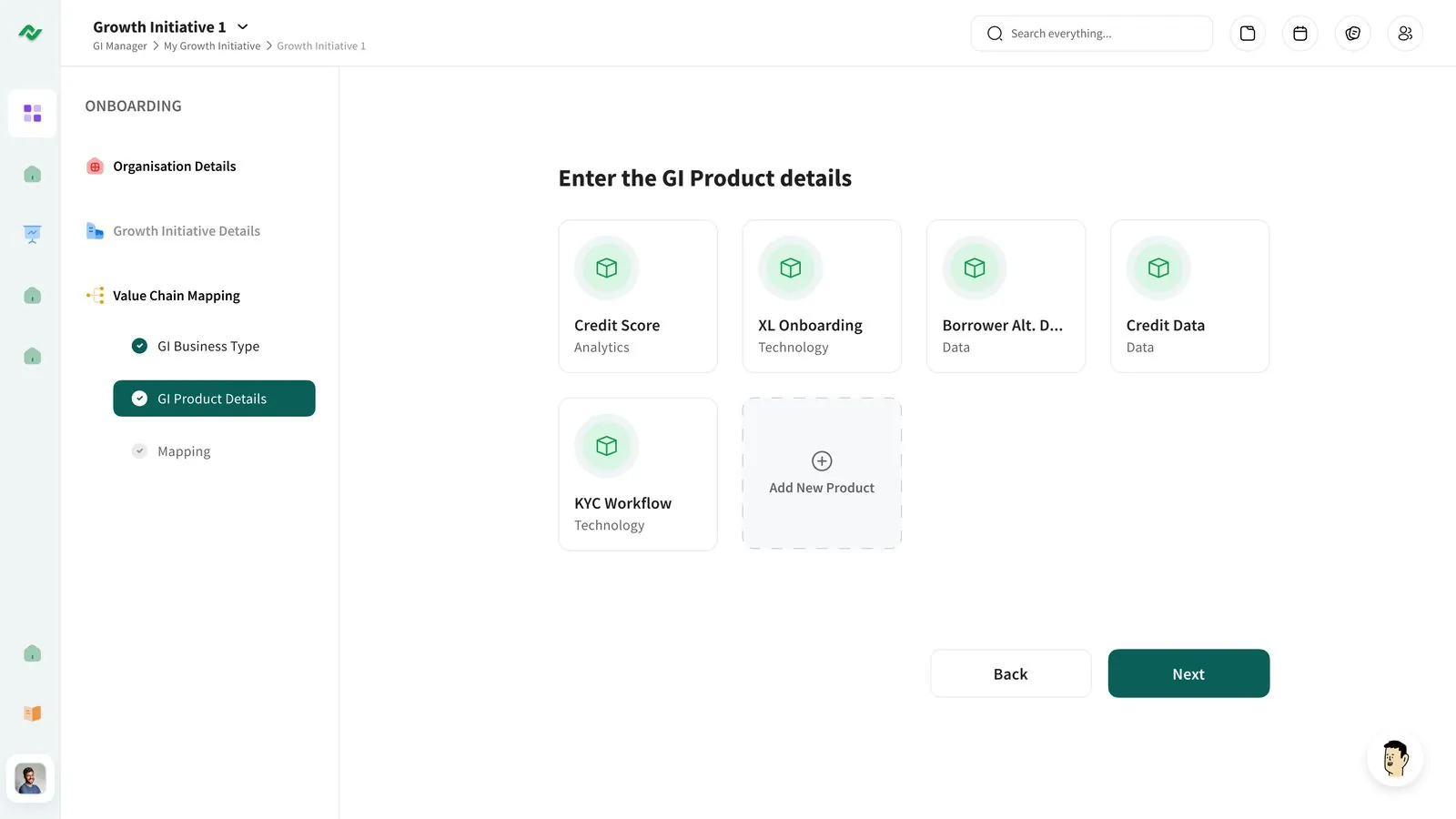
- Map what it depends on. A whiteboard, with connectors, of everything that could affect the MVP: hiring, upskilling, infrastructure, finance and more. The owner fills in each one.
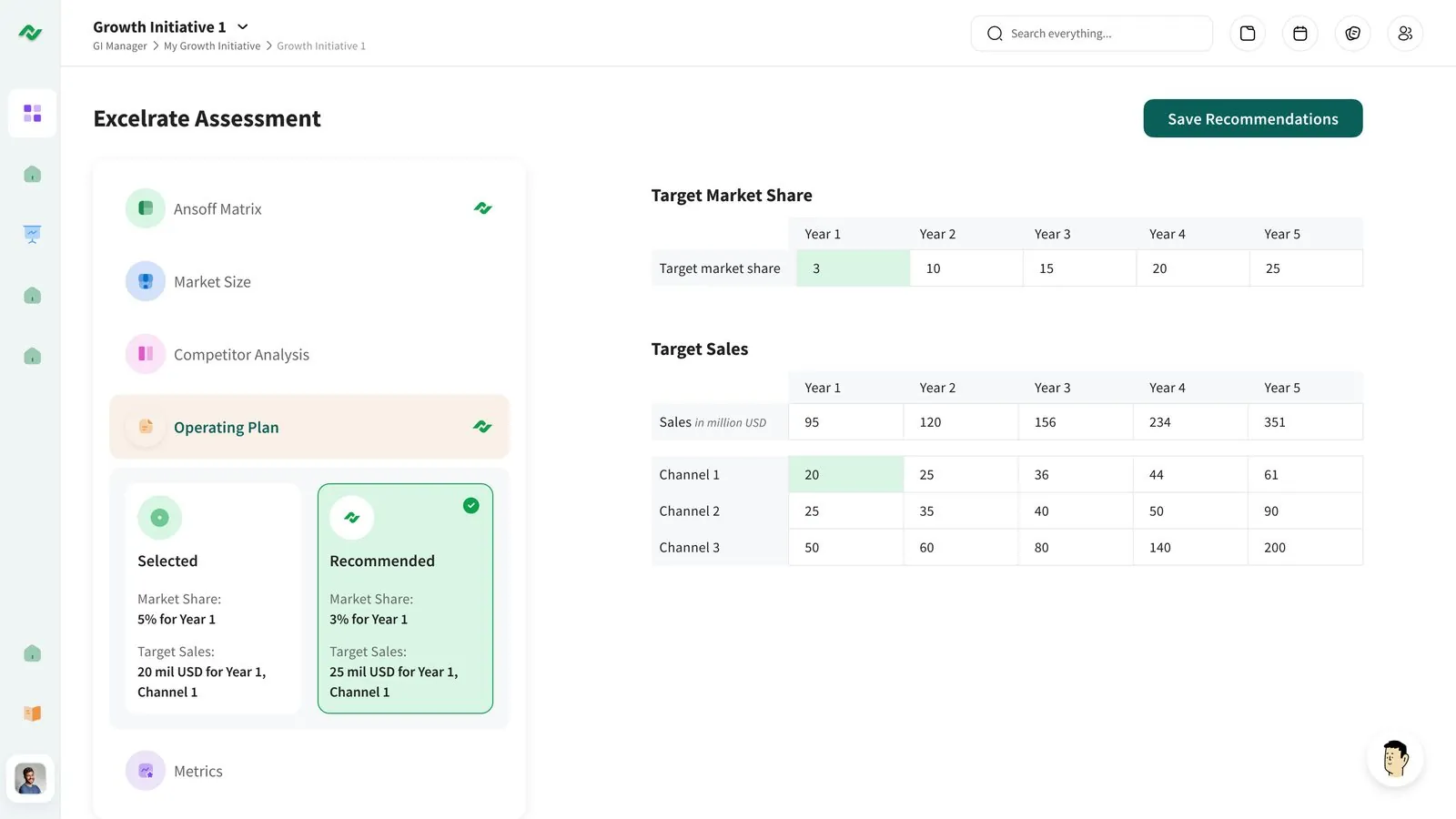
- Get a recommendations report. The client's consultants review the inputs and suggest, for example, how to phase hiring or how to train the people involved. Consulting came as part of the package.
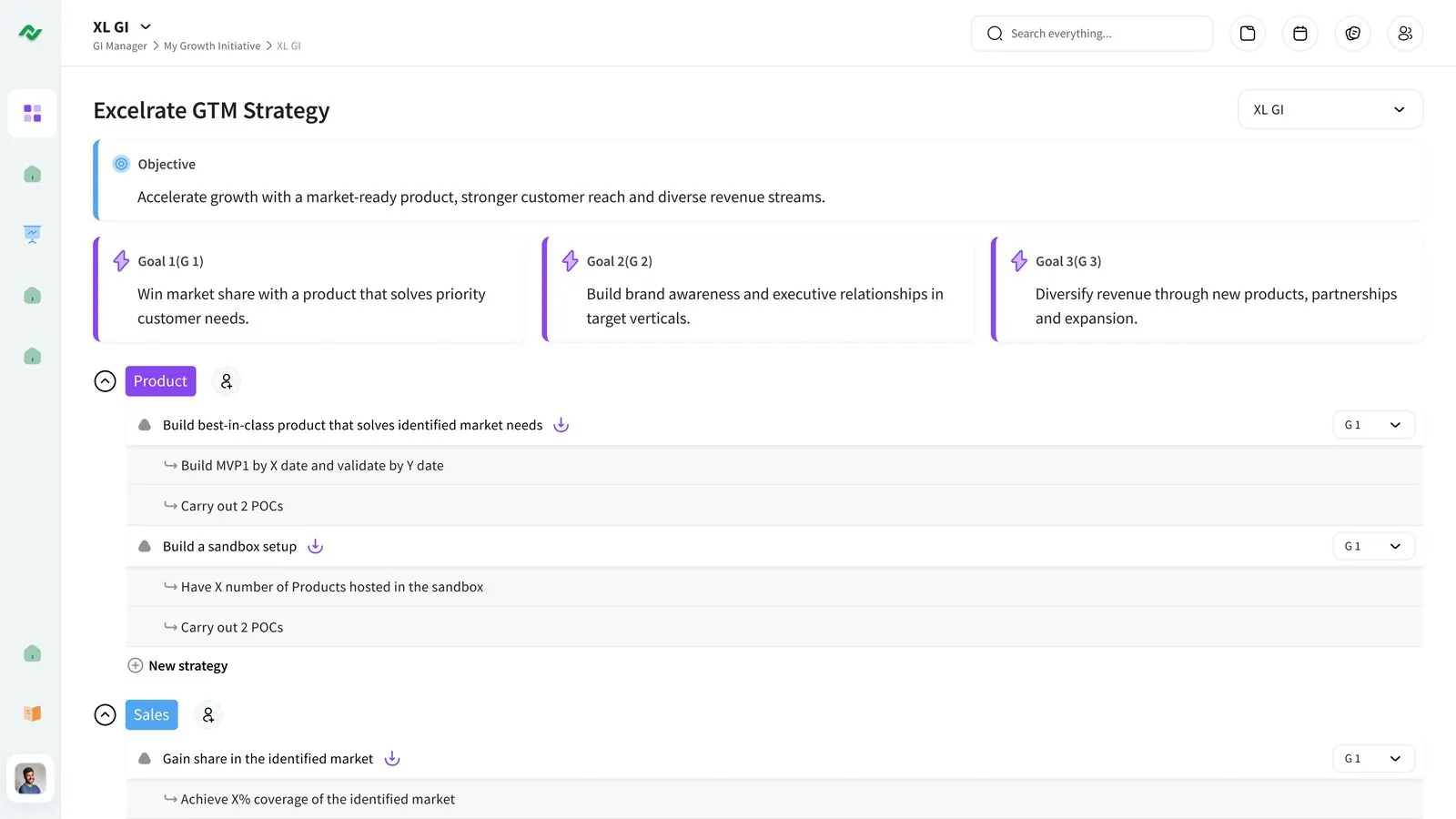
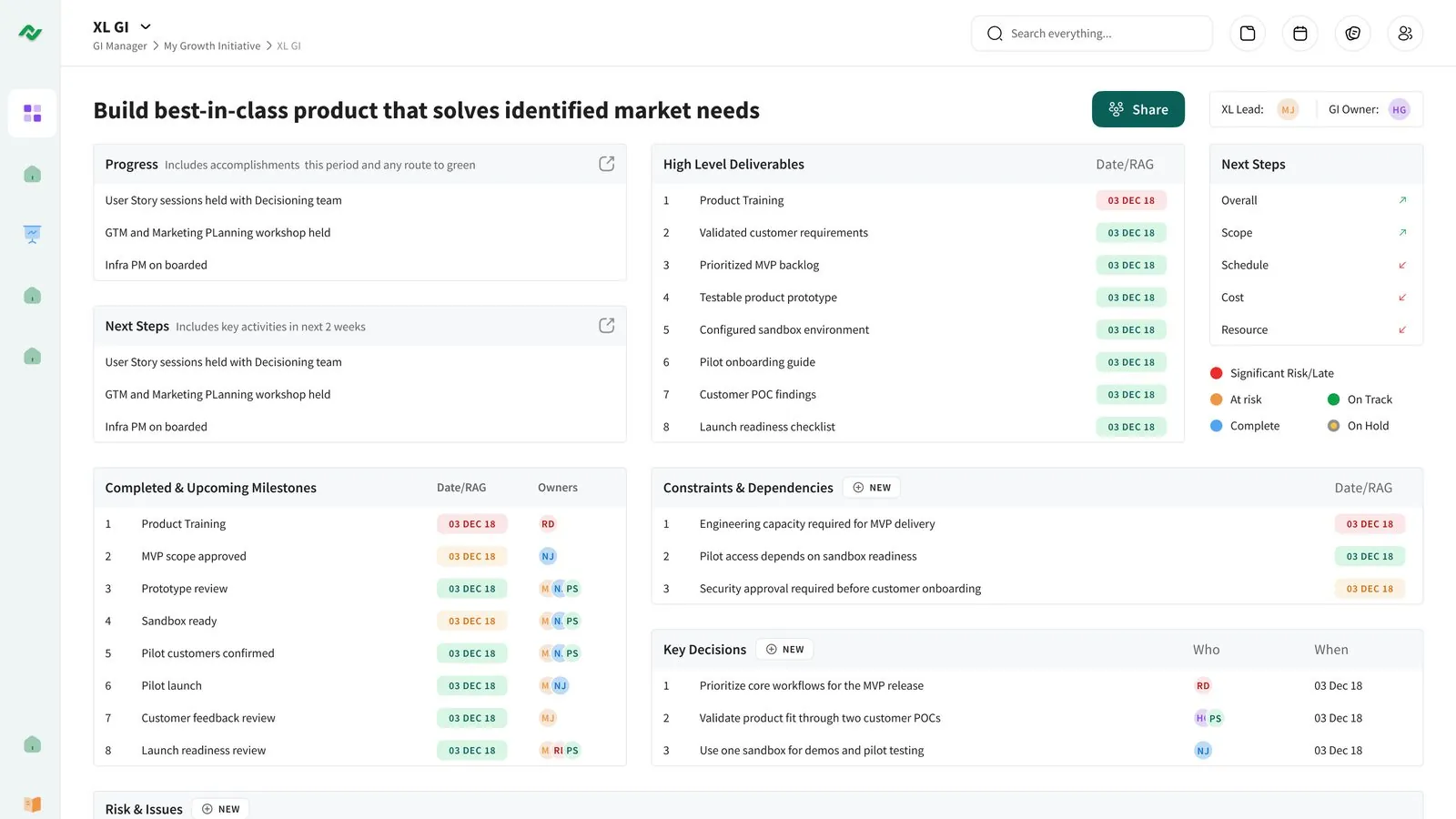
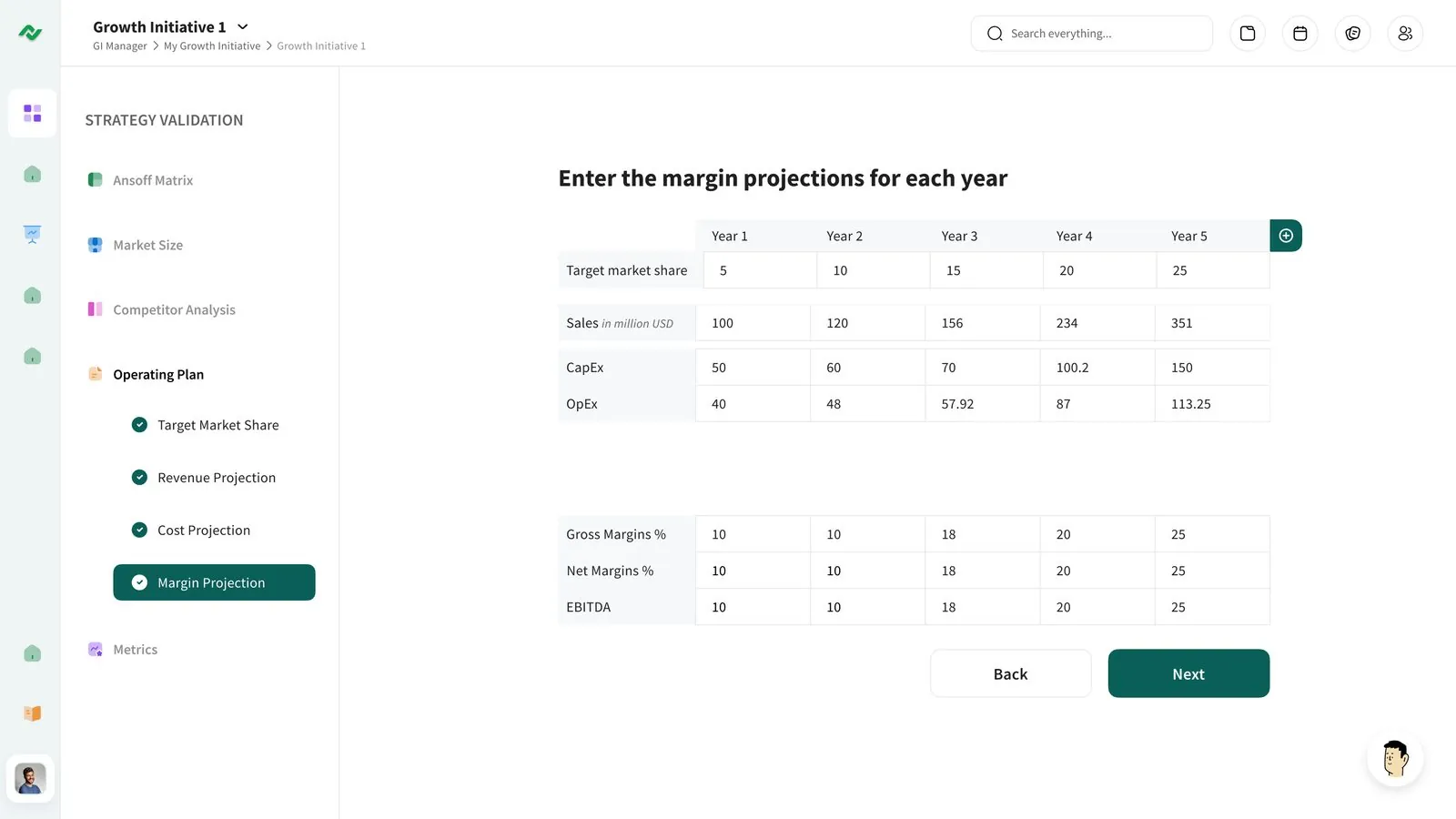
- See the plan. Everything is broken down into steps with owners and dates, so the owner can see when each one has to happen.
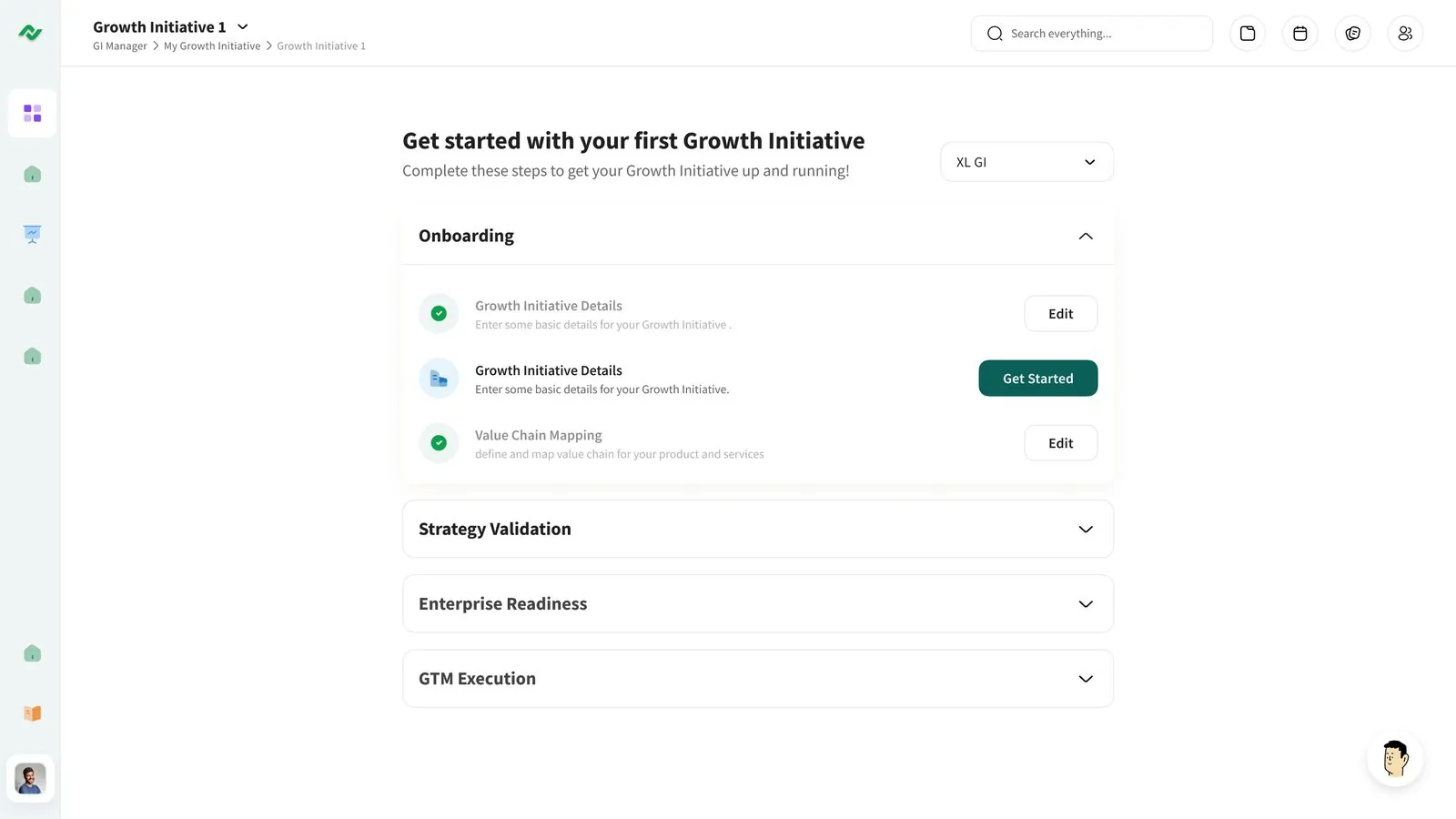
Decision 1Set up the company before the strategy
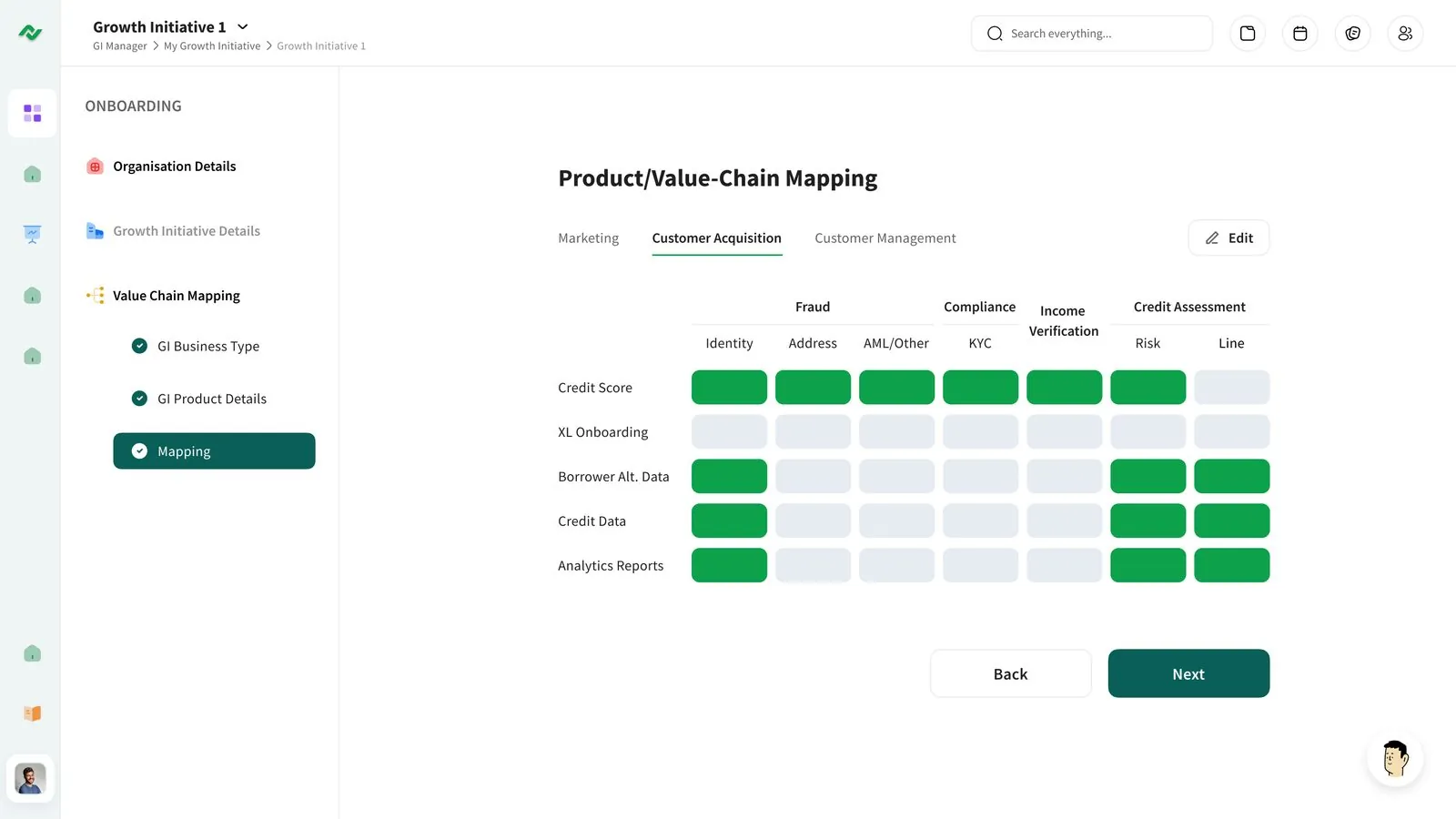
The exciting part of the product was the growth plan, so it was tempting to start there. But a plan is only useful if it knows who will carry it out. Recommendations about hiring or training mean little if the platform doesn't know the company's structure, roles and who owns what.
We put company setup first. New users describe their organisation once, and every strategy after that builds on it, so it starts from what the company already has.
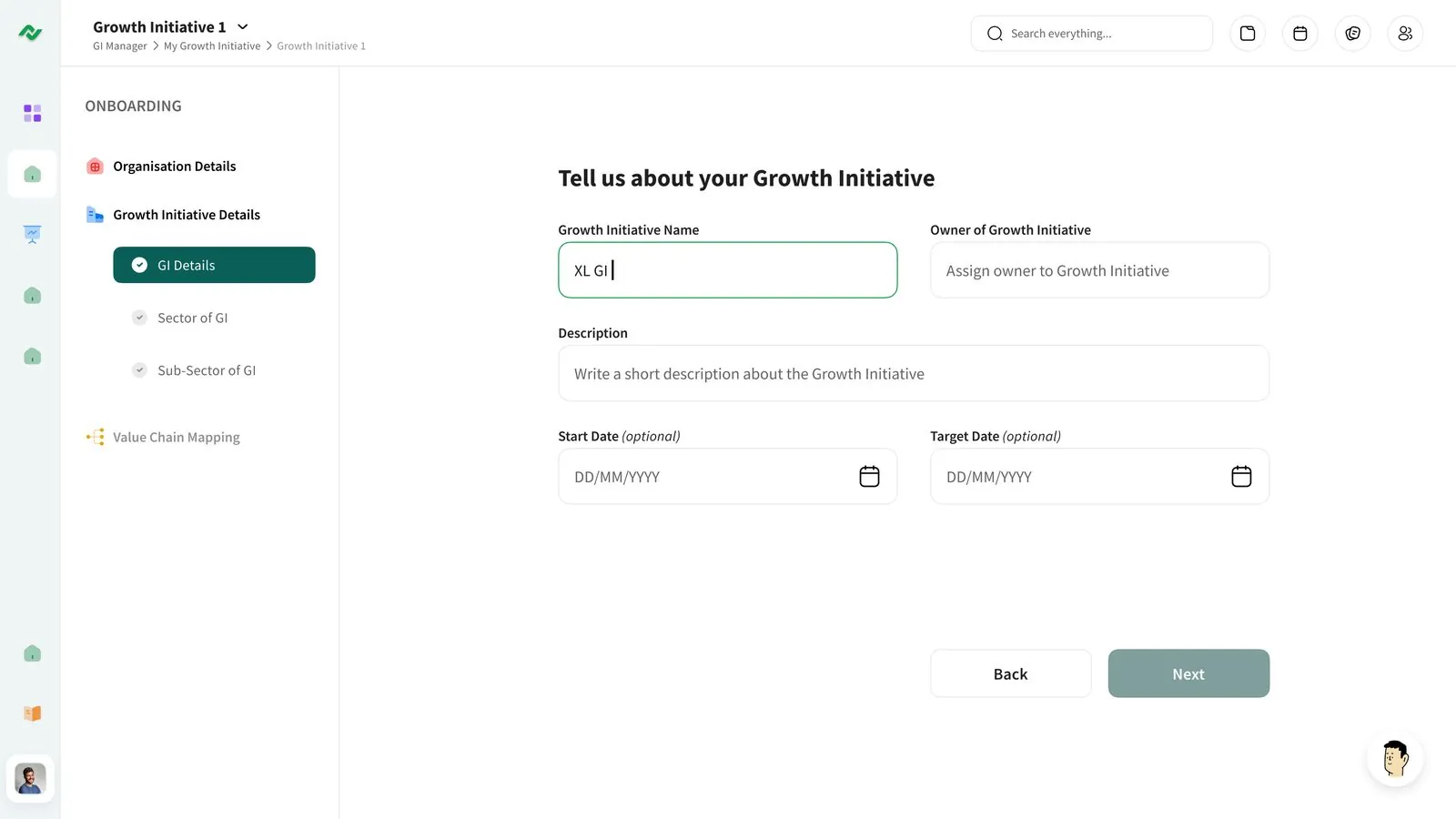
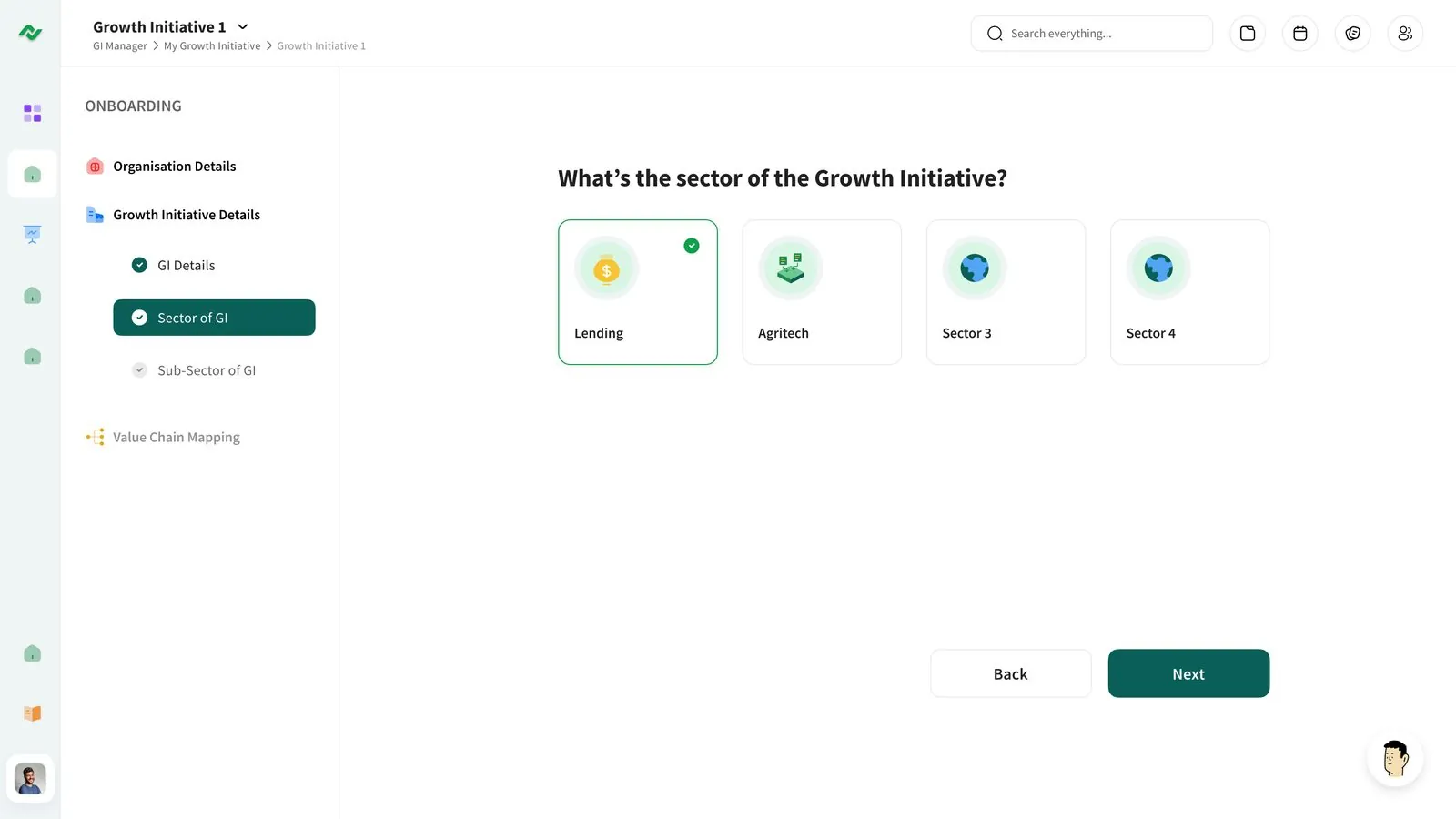
Decision 2From a list of factors to a plan you can see
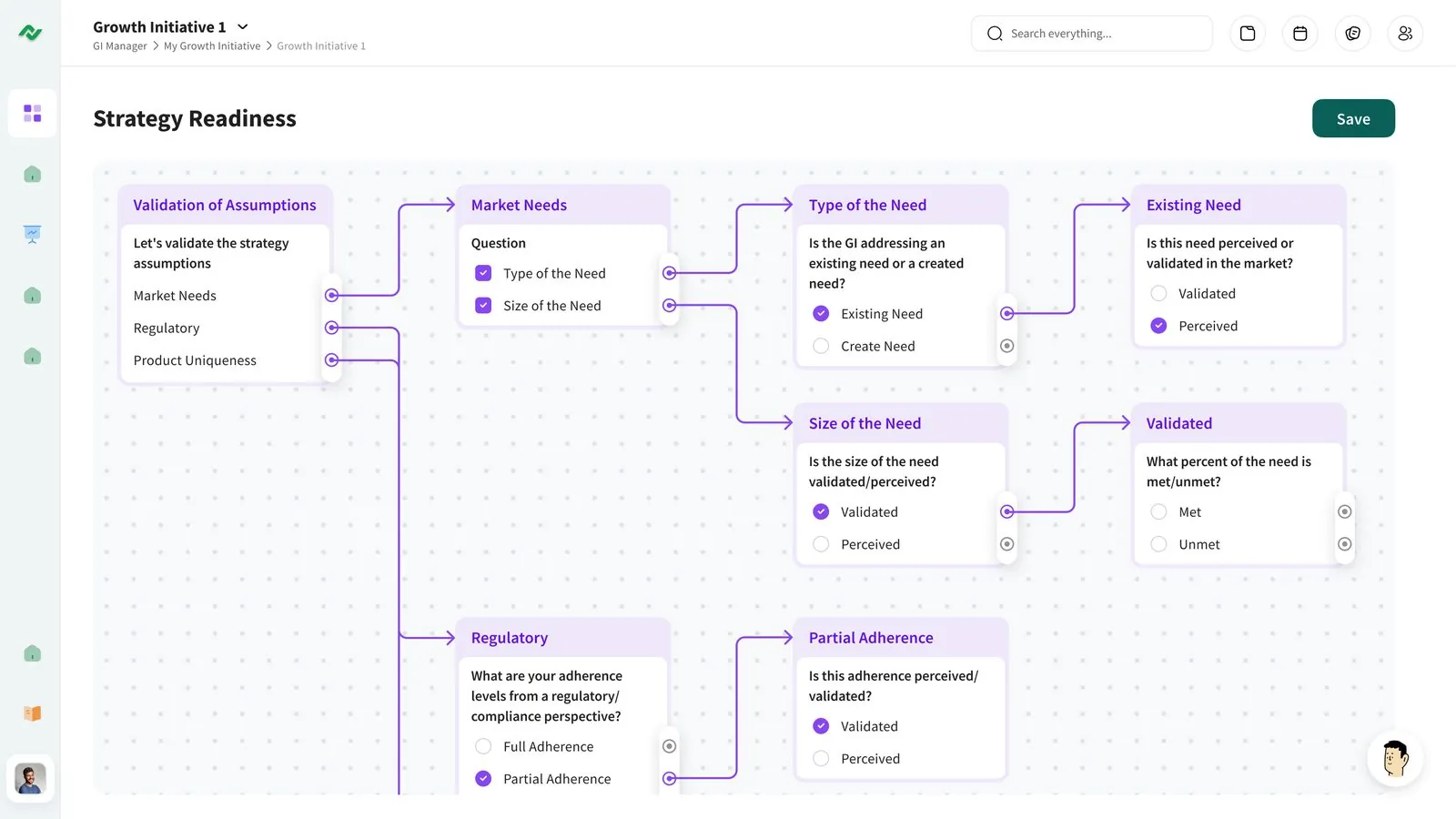
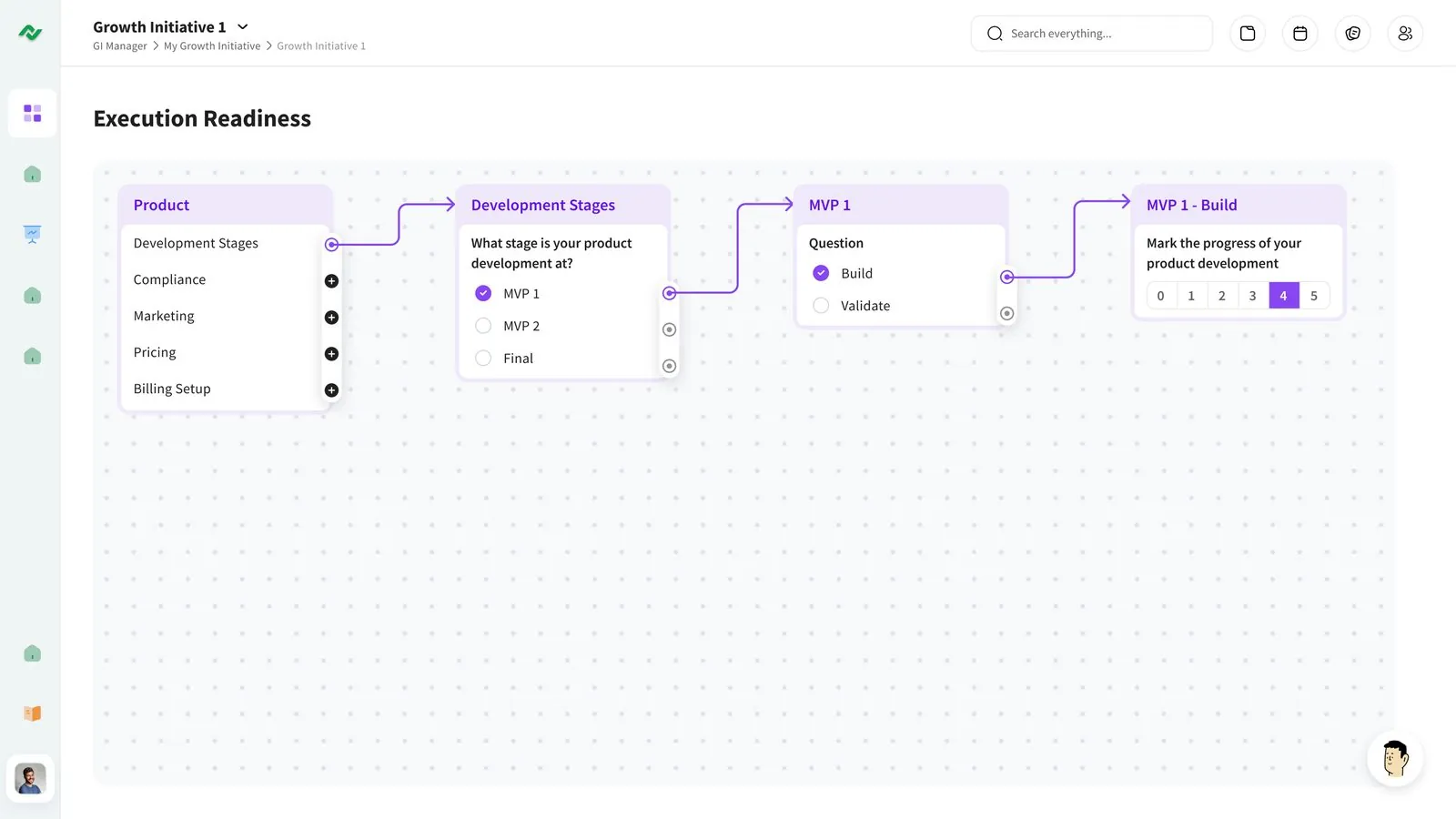
The founders didn't want a plain tracker. They wanted the product to show where a plan would fall short. Together in the workshop, we landed on a whiteboard with connectors for the inputs: every factor that could affect the MVP branches out from the strategy, and the owner fills in each one.
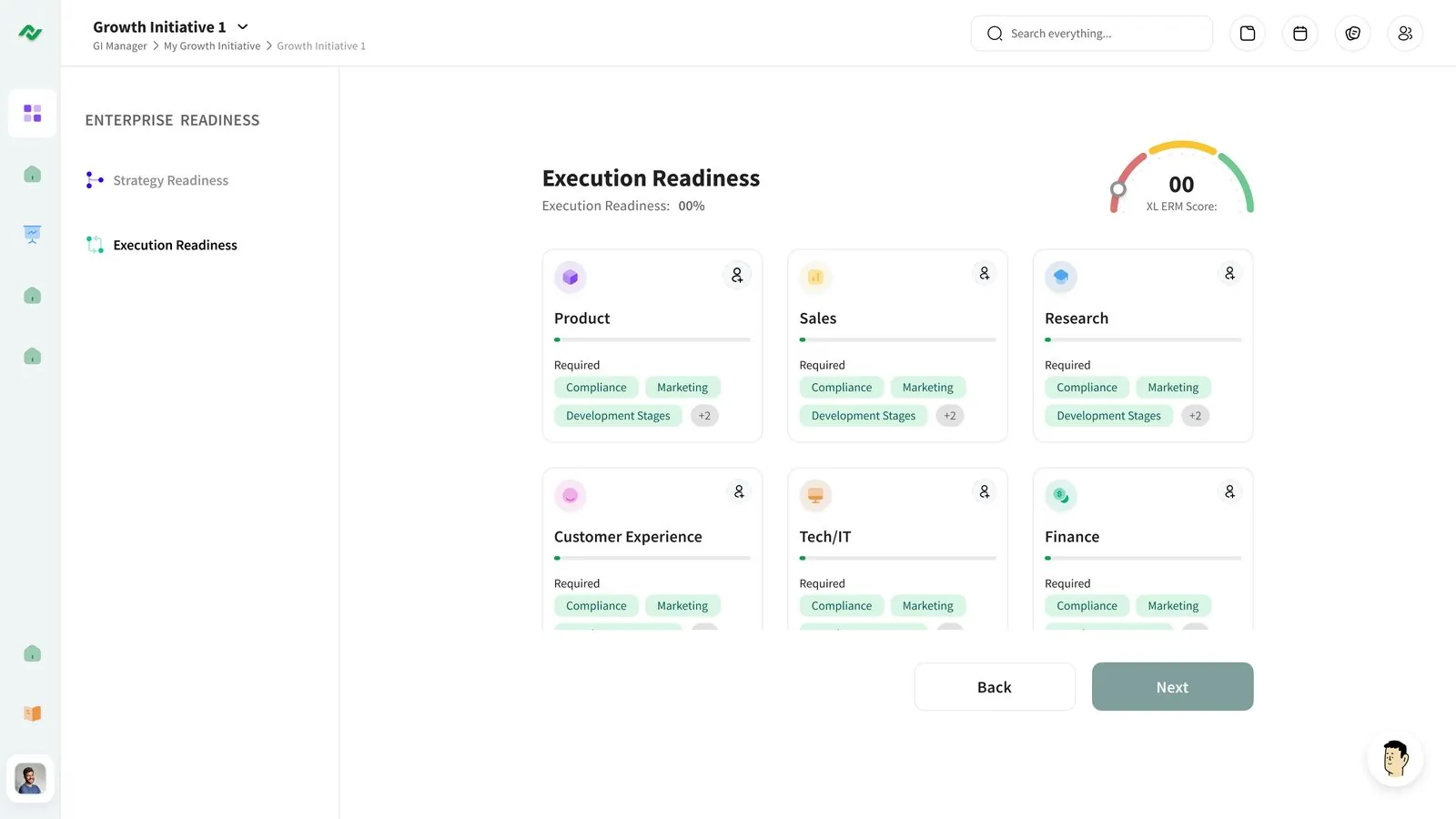
We designed what happens next. The filled-in whiteboard leads to a recommendations report from the client's consultants, and the report is then broken down into a plan. The owner can see what is needed ("10 hires"), what it involves (interviews, space, IT, salaries, training) and when each step has to happen. If one falls behind, it's clear what it pushes back.
Decision 3Colourful, but still formal
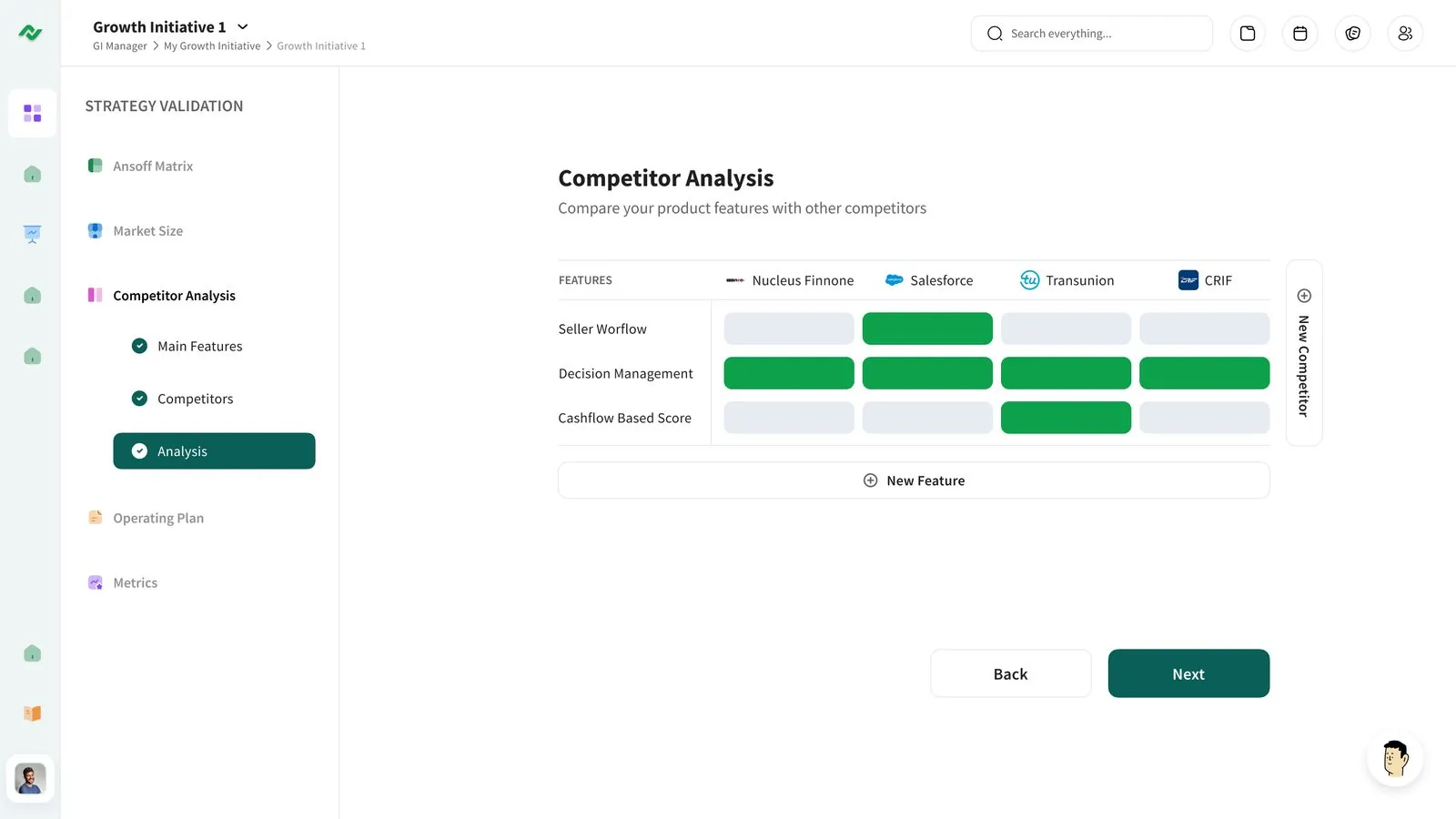
The users were senior leaders at finance companies, and the prototype had to hold up in front of investors. Enterprise planning tools often look grey and dense. We wanted it to feel serious without feeling bland.
We used colour to tell growth types and factors apart, with a consistent set of icons, inside a calm, professional layout. The colour helps people find their way around a complex plan rather than just decorating it.
Outcome
- The founders used the prototype in presentations to investors and prospective clients.
- The client went on to build and launch the product, now called GEMS. Its public site describes three stages: validating the strategy, assessing readiness and executing with control. The platform stays close to the journey we prototyped. (The marketing website wasn't part of our work.)
- The live GEMS describes itself as AI-powered. Our 2022 prototype had no AI: its recommendations came from the client's consultants.
We don't claim the prototype led to funding or growth. It was one of the tools they used to tell their story.